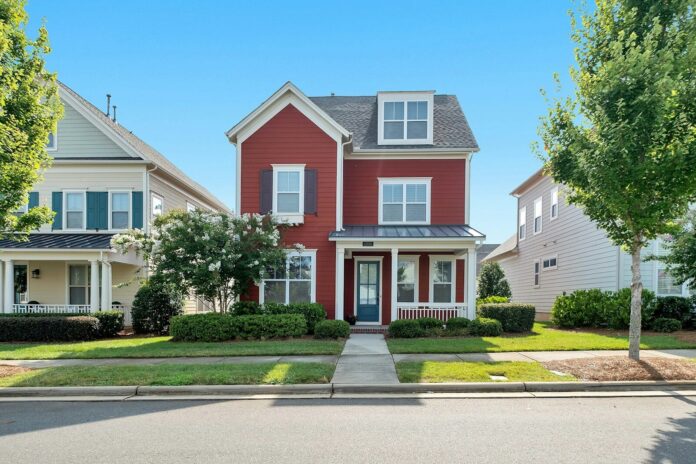

The 5% rule in real estate gives you a simple formula to decide whether renting or buying a home makes more financial sense. Multiply the home’s value by 5%, divide by 12, and compare that number to the monthly rent for a similar property. If rent is lower, renting is likely the smarter financial move.
Most people assume buying is always better than renting. It feels like building equity, growing wealth, planting roots. But that assumption costs some buyers tens of thousands of dollars. Is it better to rent or buy? That depends entirely on the math — and the 5% rule gives you a clear, repeatable way to find out. The renting vs buying decision is one of the most consequential financial choices you’ll ever make, and this framework cuts through the noise.
You probably already know buying comes with costs beyond a mortgage payment. But do you know exactly how much those hidden costs add up to each year? This guide explains the 5% rule from the ground up, walks through the calculation with real numbers, and shows you when renting is genuinely the wiser financial choice.
Here’s what you’ll learn: what the 5% rule is, how to calculate your own break-even rent, the three hidden costs that most buyers ignore, and which situations make renting the financially superior option.
Key Takeaways
– The 5% rule estimates that homeowners spend roughly 5% of a property’s value annually on unrecoverable costs (property tax, maintenance, cost of capital).
– To find your break-even rent: multiply the home price by 5% and divide by 12. If comparable rent is lower, renting wins financially.
– On a $400,000 home, the break-even monthly rent is roughly $1,667. If you can rent a similar home for less, renting likely saves you money.
– The rule assumes a 3% cost of capital (opportunity cost on the down payment), which often understates the real figure in strong investment markets.
– Renting is not “throwing money away” — it provides housing, flexibility, and preserves capital for investing.
What Is the 5% Rule in Real Estate?
The 5% rule is a back-of-napkin framework developed by financial planner Ben Felix to compare the true annual cost of owning a home versus renting one. The core idea is that homeownership carries a set of unavoidable annual costs that renters don’t pay.
These costs represent money that leaves your pocket and never comes back, regardless of whether home values rise or fall. That’s why they’re called unrecoverable costs.
According to the 5% rule, those costs add up to roughly 5% of the home’s value per year, broken down like this:
- Property tax: approximately 1% of home value per year
- Maintenance and upkeep: approximately 1% of home value per year
- Cost of capital: approximately 3% of home value per year
The first two are obvious. The third one — cost of capital — is the one that surprises most people.
What Is the Cost of Capital?
When you buy a home, you tie up a large amount of money in that property. That money could otherwise be invested. The cost of capital represents the return you give up by not investing that money elsewhere.
If you put $100,000 down on a house and the stock market averages 7% annually, your opportunity cost is roughly $7,000 per year — money you could’ve earned but didn’t. The 5% rule uses a conservative 3% figure for this, reflecting a more modest investment assumption or the interest cost if you borrowed the money.
It’s not money you spend out of pocket. But it’s money you don’t earn, which is the same thing from a financial standpoint.
How to Calculate Your Break-Even Rent
The calculation is straightforward — think of it as a personal rent vs buy calculator you can run in under a minute. Here’s the formula:
Break-even monthly rent = Home price x 5% / 12
If the monthly rent for a comparable home in your area is less than this number, renting is the financially superior choice. If rent is higher, buying might make more sense.
Let’s work through a real example.
Example: $400,000 Home
$400,000 x 0.05 = $20,000 per year in unrecoverable costs
$20,000 / 12 = $1,667 per month
If you can rent a similar home in your area for less than $1,667, renting costs you less than owning — even before accounting for mortgage interest, insurance, or HOA fees.
The Full Comparison Table
Here is how the break-even rent looks across different home prices:
| Home Value | Annual 5% Cost | Monthly Break-Even Rent |
|---|---|---|
| $250,000 | $12,500 | $1,042 |
| $400,000 | $20,000 | $1,667 |
| $600,000 | $30,000 | $2,500 |
| $800,000 | $40,000 | $3,333 |
| $1,000,000 | $50,000 | $4,167 |
Want to make your money work harder while you decide? Learn the difference between checking and savings accounts to find the right place to park your down payment while you run the numbers.
Breaking Down the Three Costs
Understanding where the 5% comes from helps you apply the rule more accurately to your situation. Each component deserves a closer look.
1. Property Tax (1%)
Property taxes vary significantly by location. The national average in the United States is about 1.1% of assessed home value per year, according to the Tax Foundation. Some states are much higher.
- New Jersey: ~2.2% effective rate
- Illinois: ~2.1% effective rate
- Texas: ~1.7% effective rate
- California: ~0.75% effective rate
- Hawaii: ~0.27% effective rate
If you live in a high-tax state, the 5% rule may actually underestimate your true unrecoverable costs.
2. Maintenance and Upkeep (1%)
The 1% maintenance rule is widely cited by financial planners. On a $400,000 home, that is $4,000 per year, or about $333 per month.
Some years you spend nothing. Then the roof fails, the furnace dies, or the water heater needs replacing — and you’re spending $8,000 in one month.
Maintenance costs tend to be higher on older homes and lower on new construction. A newer $400,000 home might average closer to 0.5% annually. A 40-year-old home might run 1.5-2%.
Renters pay none of this. When the furnace breaks in a rental, the landlord pays. That’s real financial value that often goes unacknowledged in rent vs. buy comparisons.
3. Cost of Capital (3%)
This is the trickiest component to accept emotionally, because the money does not leave your bank account in a single transaction. But it is arguably the most significant of the three.
Here is how to think about it. Suppose you buy a $500,000 home with a $100,000 down payment. Your equity grows over time as you pay down the mortgage and if home values appreciate.
But that $100,000 down payment — and any home equity you accumulate — is locked in the house. It cannot be invested in stocks, index funds, or other assets. The cost of capital measures what you give up.
The 5% rule uses 3% as a conservative estimate for this opportunity cost. In practice, long-term stock market returns average around 7-10% annually. If you use a more realistic 6-7% opportunity cost instead of 3%, the break-even calculation shifts considerably in favor of renting.
When Renting Beats Buying: Real Scenarios
The 5% rule is not theoretical. It plays out in real life for real people in predictable ways.
Scenario 1: The San Francisco Calculation
Take Jennifer, a software engineer who moved to San Francisco in 2022. She was considering buying a one-bedroom condo listed at $850,000.
Using the 5% rule: $850,000 x 5% / 12 = $3,542 per month break-even rent.
A comparable one-bedroom rental in the same neighborhood? $2,800 per month.
Jennifer ran the numbers and chose to rent. She invested the $170,000 down payment she had saved into a diversified index fund portfolio. Two years later, that portfolio had grown by roughly $28,000. Meanwhile, her monthly cash savings from renting versus owning added up to $17,688 ($742 per month x 24 months).
The 5% rule helped Jennifer avoid what would have been a financially costly decision in one of the most expensive housing markets in the country.
If you want to put that capital to work, learn how to start investing with $100 or less and build a portfolio even while you rent.
Scenario 2: The Midwest Buy
Now consider Marcus, a teacher in Columbus, Ohio. He found a three-bedroom home listed at $280,000.
Break-even calculation: $280,000 x 5% / 12 = $1,167 per month.
Comparable three-bedroom rentals in his area ran $1,400-$1,600 per month.
Buying made clear financial sense for Marcus. Not only did the monthly math work, but he also gained stability, the ability to customize the home, and potential appreciation in a growing market. The 5% rule confirmed what his gut already suspected.
Scenario 3: The Short-Term Buyer
Rachel and her partner bought a condo in Austin for $450,000 in 2021, planning to stay for three years before relocating. The break-even rent was $1,875.
What they did not fully account for: closing costs on purchase were $9,000. When they sold three years later, they paid a 5-6% real estate commission ($24,000+). Total transaction friction: over $33,000, or roughly $916 per month averaged over 36 months.
Adding that to their unrecoverable costs pushed their effective monthly housing cost well above what comparable rentals would have cost. They would have come out ahead renting.
The 5% rule does not include transaction costs. For short time horizons, buying almost never wins. Most financial planners suggest you should plan to stay at least 5-7 years for buying to make financial sense.
The Limitations of the 5% Rule
The 5% rule is a useful filter, not a complete answer. Here is what it does not capture.
It Ignores Appreciation
If home values rise significantly, the owner builds equity that renters do not. In cities like Miami, Austin, or Nashville over the last decade, appreciation dramatically outpaced the rule’s predictions.
However, appreciation is not guaranteed. Home values can stagnate or decline. The 5% rule intentionally excludes appreciation because it is unpredictable, not because appreciation is unimportant.
It Assumes a Fixed Opportunity Cost
The 3% cost of capital assumption is conservative. In a bull market where stocks return 10%+ annually, renting and investing the difference becomes even more attractive. In a flat or bear market, the 3% figure may be generous to renters.
Adjust this figure based on your realistic investment expectations.
It Does Not Account for Rent Increases
Over a 10 or 20 year time horizon, rent tends to rise. A mortgage payment (on a fixed-rate loan) stays the same. This long-term payment stability is a genuine financial advantage of buying that the 5% rule does not reflect.
It Ignores Psychological and Lifestyle Value
Owning a home provides stability, the freedom to renovate, and a sense of permanence. These have real value that cannot be quantified. If owning a home matters deeply to you for non-financial reasons, that is a completely legitimate reason to buy even if the math slightly favors renting.
How to Apply the 5% Rule to Your Decision
Here is a practical step-by-step process to use the rule for your own situation.
Step 1: Find a home you would actually buy.
Get a realistic purchase price for a property that meets your needs in your target location.
Step 2: Calculate the break-even rent.
Multiply the price by 5% and divide by 12.
Step 3: Research comparable rents.
Search rental listings for similar properties (same size, neighborhood, and quality) in your target area.
Step 4: Compare the numbers.
If comparable rents are lower than your break-even number, renting is the financially superior choice. If rents are higher, buying may make sense.
Step 5: Adjust for your time horizon.
If you plan to stay less than five years, add estimated transaction costs to the buying side. This typically makes renting look even more attractive for short stays.
Step 6: Consider the full picture.
Factor in your job stability, family plans, desire for stability, and local market conditions. The 5% rule is a financial tool, not a complete life decision.
Why “Renting Is Throwing Money Away” Is Wrong
This is perhaps the most persistent myth in personal finance. Renting is not throwing money away. Renting is exchanging money for housing, just like buying a meal is not throwing money away.
When you own a home, you also pay amounts that never come back: property taxes, maintenance, insurance, and mortgage interest. Those are gone. The portion of your payment that goes toward principal builds equity, but that is the minority of early mortgage payments.
Here is the key insight: renters can build wealth too. If you rent a home for $1,400 per month instead of buying one that costs $1,800 per month in true unrecoverable costs, you have $400 per month to invest. Invested consistently over 20 years at 7% average returns, that $400 per month becomes roughly $208,000.
That is not throwing money away. That is building wealth, just through a different vehicle.
Understanding how compound interest works is essential here. The earlier you start investing the difference, the more powerful the compounding effect becomes.
The 5% Rule and Your Emergency Fund
One critical consideration the 5% rule does not address: homeownership requires a much larger emergency fund than renting.
As a renter, your emergency fund covers job loss, medical bills, and car repairs. As a homeowner, it also covers the furnace that dies in February, the roof that leaks after a storm, and the plumbing emergency at midnight.
Most financial planners recommend homeowners hold 1-3% of home value in liquid reserves at all times, on top of a standard 3-6 month emergency fund. On a $400,000 home, that is $4,000-$12,000 just for home-related emergencies.
Before buying, make sure you have a fully funded emergency fund plus the additional reserves homeownership demands. Buying a home without adequate reserves is one of the fastest ways to turn a financial asset into a financial crisis.
Frequently Asked Questions
What exactly is the 5% rule in real estate?
The 5% rule states that the annual unrecoverable costs of homeownership (property tax at 1%, maintenance at 1%, and cost of capital at 3%) total approximately 5% of a home’s value. You can use this to calculate a monthly break-even rent figure and compare it to actual rental prices in your area.
How do I use the 5% rule to decide whether to rent or buy?
Multiply the home price you are considering by 5%, then divide by 12. This gives you the monthly break-even rent. If comparable homes rent for less than this number, renting is likely the better financial choice. If they rent for more, buying may make more sense.
Does the 5% rule account for home appreciation?
No. The 5% rule focuses on unrecoverable costs and does not factor in potential price appreciation. In markets with strong appreciation, buying may still outperform renting even when the 5% rule suggests otherwise. Appreciation is real but unpredictable.
Is the 5% rule accurate in expensive cities?
The rule is actually most useful in expensive cities, where home prices are high and comparable rents are often significantly below the break-even threshold. In San Francisco, New York, or Seattle, the 5% rule frequently confirms that renting is the better financial move.
What does “cost of capital” mean in the 5% rule?
Cost of capital refers to the return you forgo by locking money into a home rather than investing it. If your down payment and home equity could earn 6-7% in the stock market but instead sit in your house, you’re paying an opportunity cost. The 5% rule uses a conservative 3% estimate for this figure.
When is the right time to buy a house?
The right time to buy a house is when the monthly break-even rent (home price x 5% / 12) is lower than what you’d pay to rent a comparable home, you plan to stay at least five to seven years, and you have a full emergency fund plus reserves for homeownership costs. Meeting all three conditions at once is a strong signal to buy.
How long do I need to stay in a home for buying to make sense financially?
Most financial planners suggest a minimum of five to seven years. This allows enough time to recoup closing costs (typically 2-5% of the purchase price) and real estate commissions when you sell (typically 5-6%). Shorter time horizons almost always favor renting.
The 5% rule in real estate is one of the most useful frameworks for the rent vs. buy decision. It is not perfect, and it does not account for everything. But it forces you to confront the true annual cost of owning a home and compare it honestly to the cost of renting.
Here is the three-step summary:
1. Multiply the home price by 5% to find annual unrecoverable costs
2. Divide by 12 for the monthly break-even rent
3. Compare to real rental prices for similar properties in your area
If rent is lower, renting likely wins. If rent is higher, buying likely wins. Then factor in your time horizon, lifestyle priorities, and financial cushion before making the final call.
Renting and buying are both valid paths to financial stability. The right choice depends on your numbers, your market, and your life. Run the 5% rule calculation before you sign anything.
Not sure where to put the money you are saving while renting? Explore index funds vs. mutual funds to understand your options for building long-term wealth on your own timeline.
Disclaimer: This article is for educational purposes only and does not constitute financial or real estate advice. Consult with a licensed financial advisor or real estate professional before making any major financial decisions.